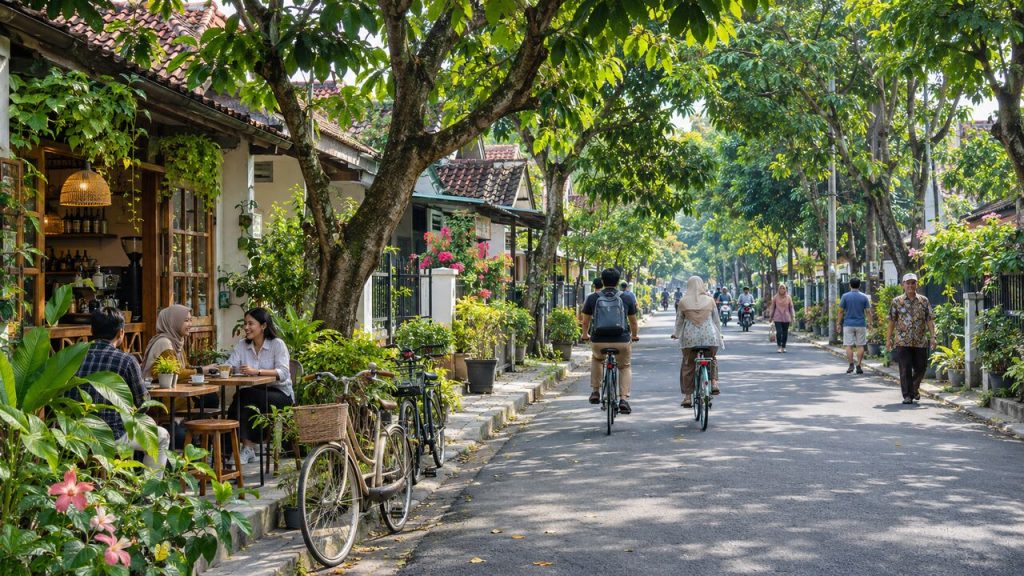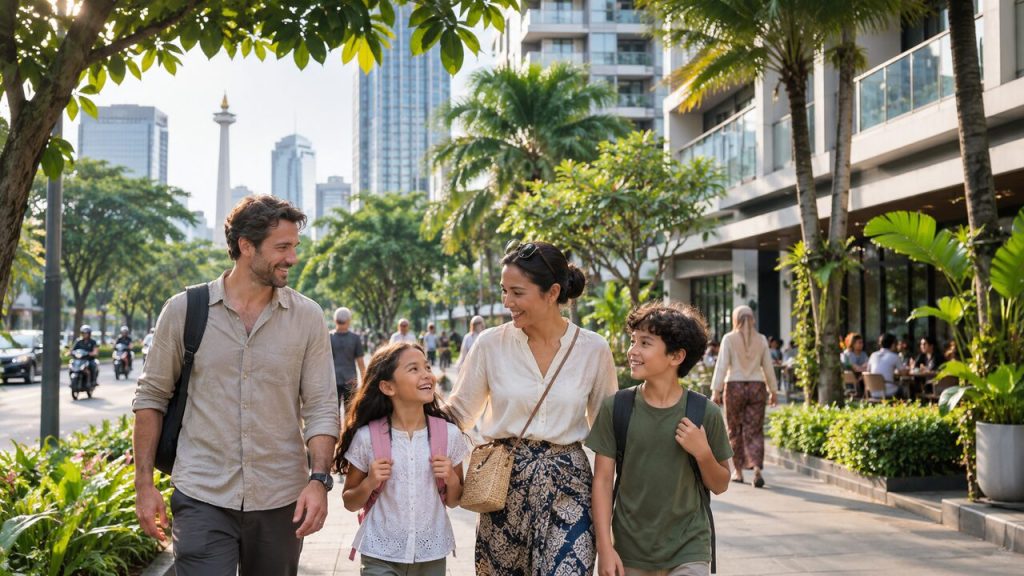
Indonesia’s Muslim-majority environment can make worship, halal food and community life accessible, but a family still needs to compare districts rather than rely on national labels.
Surabaya
A major commercial base with strong hospitals, schools, airport connections and access to East Java industry. Heat and traffic matter, but compact home-school-work planning can create a stable routine.
Yogyakarta and Malang
Both can offer education, community and calmer or cooler environments in selected areas. Families should verify international curriculum, specialist healthcare, airport access and environmental risks rather than assuming every district provides the same services.
Bandung and Jakarta
Bandung offers cooler areas and education but significant traffic. Jakarta provides the deepest corporate, school and specialist-healthcare choice, usually with higher housing and time costs.
Bali
Muslim families can live comfortably in selected communities, but school choice, mosque access, tourism-linked rent, congestion and healthcare geography should be checked carefully.
Weighted decision
Score legal residence, income fit, housing, school, hospital, mosque access, halal routine, airport travel, flooding or pollution, green space and weekly transport hours. Give the greatest weight to factors that cannot be easily changed after moving.
Interactive planning tool
Country decision scorecard
Rate each factor from 1 (weak) to 5 (excellent), then choose how important it is to your household.
Scores organize your priorities; they do not determine visa eligibility, tax residence or legal permission to work.
Review standard: Rules and official fees were checked in November 2026. Confirm the current position with the authority linked in the source section before paying or applying.
Turn the comparison into a decision record
Write the intended legal status, income source, household size, annual budget and time horizon. Score the alternatives using the same standard of housing, healthcare, education and transport. Record which figures are official, estimated or based on direct experience.
Before committing
Verify the decisive rule with its responsible authority, test the location during an ordinary month and define the financial or legal condition that would make the household change course.
Worked example: calculate the school-day cost
Combine tuition with application, registration, capital levy, uniform, meals, devices, activities and transport. Next, value the daily journey: a ninety-minute round trip across 180 school days consumes 270 family hours each year. A higher rent close to the right school can be cheaper when transport, stress and lost work time are included.
How to make a fair country comparison
Country rankings are starting points, not decisions. Compare the legal route first, because a low-cost lifestyle is irrelevant when the intended work or residence cannot be maintained. Then compare one complete household standard: similar housing quality, school type, healthcare expectation, transport and international travel.
Use city-level evidence. Indonesia alone contains global-business districts, industrial cities, tourism markets, cooler highlands and remote islands. Malaysia, Thailand and Vietnam have similar internal differences. A country average can hide the neighbourhood conditions that shape every weekday.
Build three scenarios
The base case should reflect normal income and spending. The stress case adds a medical event, currency decline or job interruption. The exit case estimates the cost and time needed to leave a lease, close or maintain a company, move children and relocate possessions. Good decisions survive all three.
Visit as a resident
Stay in an ordinary home, travel at peak hour, buy groceries, test internet, visit schools and hospitals and experience rain or heat. Speak with residents who are not selling property, visas or relocation services. Keep written observations so a pleasant holiday mood does not replace evidence.
Decision checklist
- Legal residence and permission for the actual activity.
- Total annual cost including school, insurance and compliance.
- Healthcare access for predictable and emergency needs.
- Time lost to transport and administration.
- Climate, pollution, flooding and long-term resilience.
- Community, language and family support.
Numbers to put into your planning sheet
| Item | Planning figure | How to use it |
|---|---|---|
| Jakarta 1-bedroom centre | Roughly IDR 7–12 million/month | Planning estimate; premium compounds can be much higher |
| Surabaya family lifestyle | Roughly IDR 18–40 million/month | Illustrative range excluding international school and major medical events |
| Emergency reserve | 6–12 months of core spending | Keep accessible and separate from property or company capital |
Estimates are dated November 2026 and are deliberately shown as ranges. Schooling, insurance, nationality, neighbourhood and lifestyle can change the result materially.