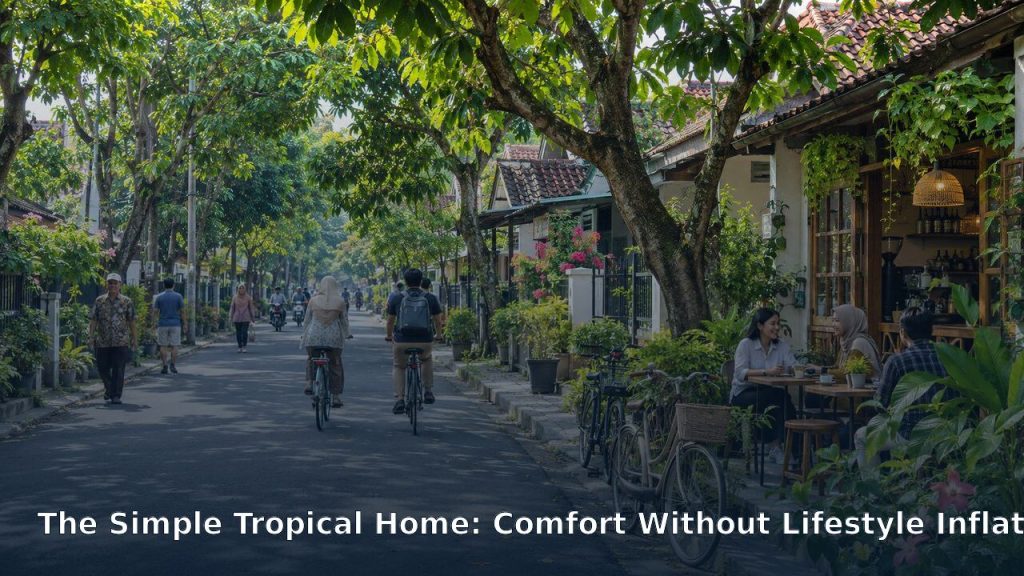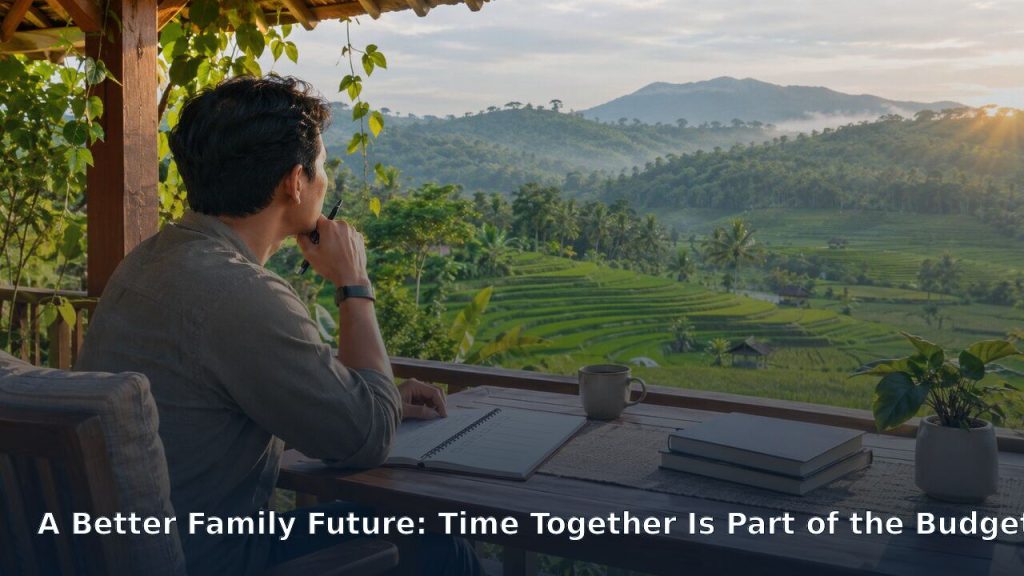
Many people organize life around the next payment, promotion or purchase. Income matters, but money is a tool for protecting time, health and family—not the final purpose of every year.

The hidden price of a high-income life
A city may offer a higher salary while consuming more hours through commuting, stress, fees and expensive housing. When the remaining time is too small for family, health or reflection, the headline income does not tell the complete story.
Measure life in years and hours
Ask how many calm hours you control each week. Consider air quality, access to nature, housing space, community, healthcare and the distance between home, school and work. These factors accumulate over decades.
Design the future deliberately
Build emergency savings, portable skills and legal residence options before a crisis forces a decision. A lower-cost base such as the right Indonesian city may create room to work less frantically and invest more consistently.
Use balance, not escape
A green location cannot repair weak finances or an unsuitable visa. The goal is a lawful, sustainable combination of income, purpose, family time and a place that supports ordinary daily life.
This article is a decision framework, not a promise that one country or city suits everyone. Test the location and verify current legal requirements before committing.
Worked example: compare one ordinary Tuesday
Use the same household and income in every country. Price a suitable home, school or workspace, insurance, transport, food, compliance and two annual trips. Then describe an ordinary weekday hour by hour. The place that wins on rent can lose through commuting, unreliable administration or weak legal status; the expensive city may recover value through time and predictable services. Keep the comparison dated and revisit it after a trial stay.
A decision is successful only if it remains sustainable
Long-term planning starts by separating what looks impressive from what improves ordinary life. Salary, property size and a prestigious address are visible; sleep, time with children, clean air, supportive neighbours and financial resilience are less visible. Yet the second group determines whether a family can maintain its choices through illness, job changes, ageing and economic shocks.
Use a twenty-year question instead of a one-year question: if the same routine continued, would it strengthen health, savings, relationships and useful skills? A city that produces high income but consumes nearly every hour may be a temporary career strategy, not a complete life strategy. Conversely, a peaceful low-cost location without legal residence, healthcare or reliable income is not genuine security.
Create a personal location score
Give each candidate place a score from one to five for legal stability, total annual cost, healthcare, education, air and water, green space, travel connections, community, climate risk and hours lost to transport. Weight the factors instead of treating them equally. A family with young children may give education and commute twice the weight of entertainment; a retiree may place healthcare and walkability first.
Indonesia offers unusually wide choices, from dense commercial centres to cooler highland cities and greener regional communities. That diversity is an advantage only after checking drainage, hospitals, schools, internet, airport access and the legal basis for staying or working. Spend an ordinary trial month in the exact neighbourhood and keep the freedom to leave before making a permanent commitment.
Convert the idea into a five-year plan
- Build an emergency reserve outside any property or business investment.
- Develop income that is portable or legally connected to the chosen location.
- Rent first and observe wet season, traffic and weekday routines.
- Protect health insurance and residence continuity.
- Review the plan annually using time, health and savings—not income alone.
Numbers to put into your planning sheet
| Item | Planning figure | How to use it |
|---|---|---|
| Housing reserve | 3–6 months of rent | Include deposit, temporary stay and setup |
| Emergency reserve | 6–12 months of core spending | Keep accessible and separate from company capital |
| Annual compliance | Budget separately | Visa, insurance, accounting and travel do not fit a rent-only comparison |
Estimates are dated November 2026 and are deliberately shown as ranges. Schooling, insurance, nationality, neighbourhood and lifestyle can change the result materially.